

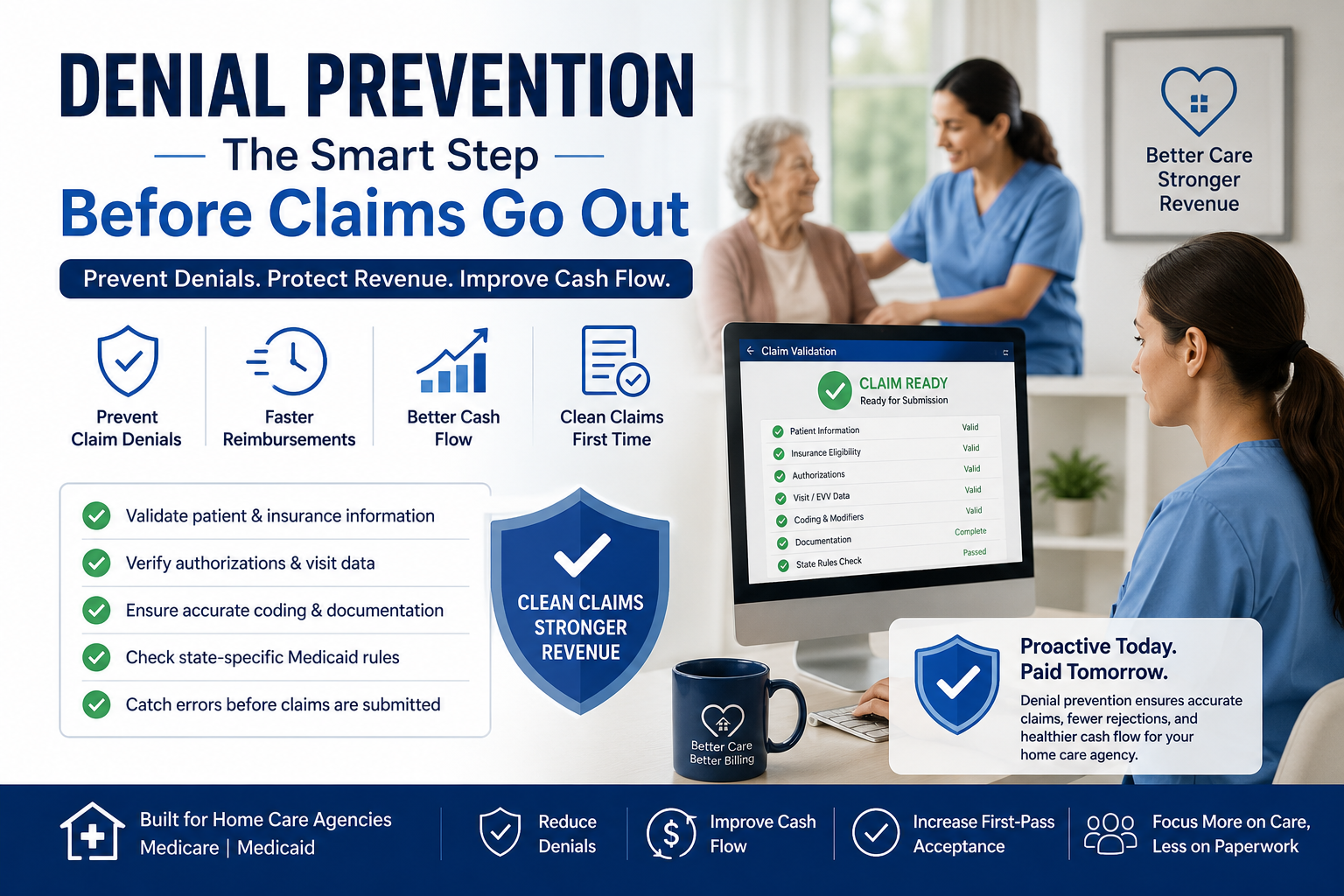
In home care, getting paid on time isn’t just about delivering quality care, it’s also about submitting clean, accurate claims the first time.
Many agencies focus on fixing denied claims after they happen. While denial management is important, preventing denials before claims are submitted is far more effective. Every denied claim delays reimbursement, increases administrative work, and affects cash flow.
For Medicare and Medicaid home care agencies, denial prevention has become an essential part of a healthy revenue cycle.
In this article, we’ll explain what denial prevention is, why it matters, the most common reasons claims are denied, and how agencies can reduce denials before they occur.
What Is Denial Prevention?
Denial prevention is the process of identifying and correcting billing issues before a claim is submitted to Medicare, Medicaid, or other payers.
Instead of waiting for a claim to be rejected and then spending time fixing and resubmitting it, agencies verify that the claim meets all payer requirements before it leaves their system.
Think of it as a quality check for healthcare claims.
The objective is simple:
- Submit clean claims
- Reduce claim rejections
- Improve first-pass acceptance
- Accelerate reimbursements
Reduce administrative workload
Why Claim Denials Are So Expensive
Many agencies underestimate the true cost of a denied claim.
A denial doesn’t only delay payment—it creates extra work across multiple departments.
A denied claim often requires:
- Staff to identify the issue
- Reviewing visit documentation
- Correcting billing errors
- Rebuilding claim files
- Resubmitting claims
- Following up with payers
Each correction costs valuable staff time that could be spent processing new claims.
When denials accumulate, agencies experience:
- Slower cash flow
- Higher operational costs
- Increased accounts receivable
- Revenue leakage
- Staff burnout
For agencies processing hundreds or thousands of claims each month, even a small denial rate can have a significant financial impact.
Common Reasons Home Care Claims Are Denied
Most denials are preventable.
Here are some of the most common reasons:
1. Missing or Invalid EVV Data
Many Medicaid programmes require Electronic Visit Verification (EVV).
If visit times don’t match, caregiver information is incomplete, or required EVV data is missing, claims may be denied.
2. Documentation Errors
Incomplete documentation can delay or prevent payment.
Examples include:
- Missing caregiver signatures
- Incomplete visit notes
- Missing service documentation
- Incorrect procedure codes
3. Incorrect Patient Information
Simple demographic mistakes can cause claims to fail.
Examples:
- Wrong Medicaid ID
- Misspelled patient name
- Incorrect date of birth
Invalid insurance details
4. Authorisation Issues
Claims are frequently denied when:
- Authorisation has expired
- Approved units are exceeded
- Service dates fall outside the approved period
5. Duplicate Claims
Submitting the same claim multiple times can trigger automatic payer rejections.
6. State-Specific Medicaid Rules
Every state has unique billing requirements.
Claims that meet one state’s rules may fail in another due to differences in:
- Visit validation
- Billing formats
- Documentation requirements
Why Preventing Denials Before Submission Matters
Fixing denied claims after submission is always more expensive than preventing them in advance.
When claims are checked before submission, agencies can:
- Identify missing information
- Validate visit data
- Verify payer requirements
- Confirm billing accuracy
- Resolve issues before claims reach the payer
This results in:
- Higher first-pass claim acceptance
- Faster reimbursements
- Fewer resubmissions
- Improved productivity
- Better financial stability
How Technology Helps Prevent Claim Denials
Manual claim reviews are time-consuming and prone to human error.
Modern revenue cycle solutions can automate many of the validation steps that staff traditionally perform.
These systems can:
- Validate claim data
- Check required documentation
- Detect billing inconsistencies
- Verify Medicaid billing rules
- Flag missing information
- Identify duplicate claims
- Review coding accuracy before submission
This allows billing teams to focus on exceptions rather than reviewing every claim manually.
Best Practices for Reducing Claim Denials
Home care agencies can significantly improve claim quality by following these best practices:
Standardise Documentation
Ensure caregivers complete required documentation during every visit.
Verify Patient Information
Confirm patient demographics and insurance details before billing.
Monitor Authorisations
Track expiration dates and approved service units to avoid billing beyond authorised limits.
Validate Claims Before Submission
Implement a review process that checks claims for missing information and billing inconsistencies.
Keep Billing Teams Updated
Payer policies and Medicaid regulations change regularly. Ongoing staff training helps reduce avoidable errors.
Analyse Denial Trends
Review denial reports each month to identify recurring issues and implement corrective actions.
The Business Impact of Denial Prevention
Reducing denials doesn’t just improve billing performance—it strengthens the entire organisation.
Agencies that invest in denial prevention often benefit from:
- Faster revenue collection
- Healthier cash flow
- Reduced administrative burden
- Improved staff efficiency
- Greater compliance with payer requirements
- Better financial forecasting
Rather than spending time fixing rejected claims, billing teams can focus on processing more claims accurately.
Looking Ahead: Smarter Denial Prevention
As billing requirements continue to evolve, many agencies are adopting intelligent validation tools that review claims before submission.
Advanced solutions can analyse claim data, compare it against payer rules, and flag potential issues before a claim reaches Medicare or Medicaid. This proactive approach helps agencies minimise preventable denials, improve operational efficiency, and maintain a healthier revenue cycle.
Conclusion
Claim denials are an unavoidable part of healthcare billing—but many of them are preventable.
For home care agencies, preventing errors before claims are submitted is far more efficient than correcting them after a denial. By strengthening documentation, verifying claim data, monitoring authorisations, and using automated validation tools, agencies can improve first-pass acceptance, reduce administrative workload, and accelerate reimbursements.
A proactive denial prevention strategy helps protect revenue, improve cash flow, and allows care teams to focus more on delivering quality patient care rather than resolving billing issues.
